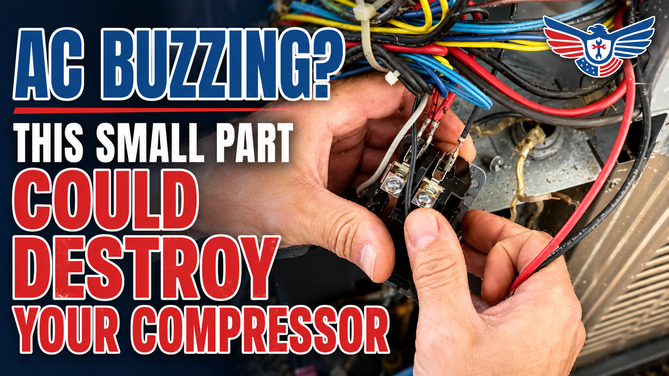
If your outdoor AC unit starts making a loud buzzing or humming sound, don’t assume it’s just normal operating noise. Sometimes that sound is coming from a small electrical component called a contactor, and when a contactor starts failing, it can create problems far beyond an annoying buzz.
During a recent service call, we found exactly that. The system was trying to operate normally, but the contactor had developed significant carbon buildup around its contact points. The result was a poor electrical connection, excessive heat, and the buzzing noise that brought attention to the problem in the first place.
What Does an AC Contactor Actually Do?
A contactor is essentially an electrically controlled switch inside your outdoor HVAC unit.
When your thermostat calls for cooling, the system sends a low-voltage signal to the contactor. That energizes a coil inside the contactor, creating a magnetic field that pulls the contacts together. Once those contacts close, higher voltage can flow to components such as the compressor and condenser fan.
It sounds complicated, but the idea is simple: low voltage controls a switch that allows high voltage to reach the equipment.
That small switch does a lot of work every time your air conditioner turns on and off.
Why Does a Bad Contactor Start Buzzing?
Over time, the contact points inside a contactor can become worn, burned, or covered with carbon buildup.
In the unit shown in the video, the old contactor had noticeable carbon tracking around the contacts. That buildup begins acting almost like insulation between the electrical surfaces.
Instead of making a clean, solid connection, the contactor may struggle to fully engage.
That can create:
- Buzzing or humming
- Excessive heat
- Poor electrical contact
- Voltage drop across the contactor
- Unreliable system operation
Once we opened the old contactor, the damage was easy to see. The contact surfaces were dark and heavily worn from heat and repeated operation.
Why Voltage Drop Matters
A damaged contactor isn’t just noisy.
If the contacts aren’t making a solid connection, voltage can drop as electricity passes through them. That becomes more concerning when the contactor is supplying power to something as important and expensive as your AC compressor.
A compressor is designed to operate within a proper electrical range. Poor electrical connections can put unnecessary stress on the system and potentially contribute to premature component damage.
That’s why catching a failing contactor early can be much cheaper than waiting until a larger problem develops.
Sometimes the AC Isn’t Broken. It’s Just Waiting.
Another useful lesson from this service call involved the system’s anti-short-cycle protection.
When the unit was first tested, the control board showed a rapid flashing light. That didn’t indicate a failure. The system was intentionally delaying startup.
Many HVAC systems include a short-cycle protection delay that may keep the compressor from restarting immediately after being shut down. In this case, the delay lasted roughly three to five minutes.
That protection helps prevent the compressor from repeatedly turning on and off too quickly.
So if your technician shuts the system down and it doesn’t immediately restart, that doesn’t automatically mean something else went wrong.
Ants Can Actually Cause HVAC Problems
One of the more surprising things we regularly see around outdoor HVAC equipment is insect activity.
Small ants can work their way into contactors and electrical components. In severe cases, they can collect around the contact points and interfere with the electrical connection.
During this repair, there were signs that ants had likely been around the unit, although they hadn’t completely packed the contactor.
Keeping the area around your outdoor unit clean and addressing ant activity around the equipment can help reduce the chances of insects getting into sensitive electrical components.
Replacing the Contactor
Once the failed contactor was identified, the replacement itself was fairly straightforward for an experienced HVAC technician.
The bigger issue is making sure the job is done safely and correctly.
Before disconnecting anything, the wiring needs to be identified so every connection goes back to the proper location. One simple method technicians use is marking wires or taking a picture before removing them.
The replacement contactor also needs to have the correct coil voltage. In this system, the replacement used a 24-volt coil.
Connections then need to be tightened correctly without damaging the terminals or clamping down on wire insulation instead of bare copper.
After everything was reconnected, the wiring was checked again before restoring cooling.
The Most Important Step: Verify the Power Is Off
Outdoor HVAC equipment contains dangerous voltage.
Turning off a disconnect or breaker is not enough by itself. A technician should verify that the power is actually off before working inside the equipment.
There can also still be low-voltage power coming from the indoor air handler. Accidentally grounding that circuit can blow a fuse or, in some systems, damage the transformer.
This is one reason electrical HVAC repairs are better left to trained technicians rather than treating them like a simple DIY parts swap.
The Buzz Was Gone
After the new contactor was installed and the system completed its anti-short-cycle delay, the contactor pulled in normally.
No buzzing.
No struggling connection.
The AC system was back up and running.
A contactor isn’t one of the biggest parts inside your air conditioner, but when it begins failing, it can create electrical problems that shouldn’t be ignored.
If you hear an unusual buzzing sound coming from your outdoor AC unit, shutting the system down and having it checked may save you from a much more expensive repair later.
Hearing Something Strange From Your AC?
If your air conditioner is buzzing, humming, struggling to start, or simply doesn’t sound like it normally does, American Veteran Air & Heat can help diagnose the problem before a small repair becomes a major one.
864-435-0822 to schedule service.
Service That Honors.